



Volume 1
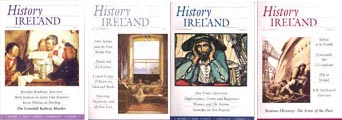
Issue List
Issue 1 (Spring 1993)
Issue 2 (Summer 1993)
Issue 3 (Autumn 1993)
Issue 4 (Winter 1993)


Personal Histories
Editor’s Choice


On this Day
May 26
- 1972 Minister for Justice Desmond O’Malley reintroduced the Special Criminal Court under Part V of the Offences Against the State Act (1939).
- 1900
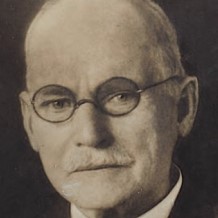 Luke Dillon, a leading light in the Fenian dynamite campaign (1881–5), was sentenced to life imprisonment along with two others for attempting to bomb the Welland Canal in Canada, an important shipping lane at the time for Britain, then embroiled in the Boer War. There was little in ‘Dynamite’ Luke’s early life to foretell such notoriety. Born in Leeds to a couple who had fled the ravages of the Famine in their native County Sligo, he was just six years of age when his family moved to New Jersey. At the age of eighteen he joined the US Army, served in the Indian Wars, married and settled down in Philadelphia as a shoemaker, specialising in the manufacture of slippers. And then he joined Clan na Gael, fell under the influence of the so-called ‘Triangle’ and became a dedicated recruit for their mission ‘to bring the fight for Irish independence to the heart of the British Establishment’. He made two trips to London. In May 1884 he placed a bomb in a public toilet underneath Scotland Yard, which devastated the offices and records of the Special Irish Branch, established a year earlier to combat the ‘dynamiters’. In January 1885 he returned, placing two bombs in the House of Commons as others attempted to blow up the Tower of London. And he remained steadfast to the end. Refusing appeals by Clan na Gael leaders to admit his guilt and petition the Canadian government for clemency—‘the rest of my life,’ he declared, ‘would not be worth such a surrender of principle’—he served his full sentence and promptly rejoined Clan na Gael. ‘The revolutionary who never saw his native land’ died in 1930 at the grand old age of 81.
 - 1819 Jasper Joly, book collector whose donation to the RDS in 1863 of a collection of 23,000 books and unbound papers and prints, notably on Irish history, topography and biography, is now housed in the National Library, born in Clonsast, Co. Offaly.
- 1949 Jeremy Corbyn, trade union representative, MP for Islington North since 1983 and leader of the British Labour Party since 2015, born in Wiltshire.
- 1968 Desmond O’Malley (Fianna Fáil) was elected to Dáil Éireann after winning the East Limerick by-election following the death of his uncle, Donagh O’Malley.
- 1964 President Eamon de Valera began a state visit to the USA. During his stay he addressed both houses of Congress and made a private visit to the home of the widowed Jacqueline Kennedy.
- 1868 Michael Barrett (27) from County Fermanagh was hanged in Newgate prison, having been convicted on dubious evidence for complicity in the Clerkenwell explosion (13/12/1867). He was the last man to be publicly hanged in Britain.
- 1848 John Mitchel, Young Irelander, was convicted by a packed jury on a charge of treason-felony and sentenced to fourteen years’ transportation. He began his Jail Journal the following day.